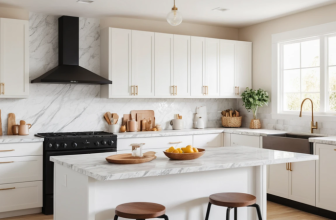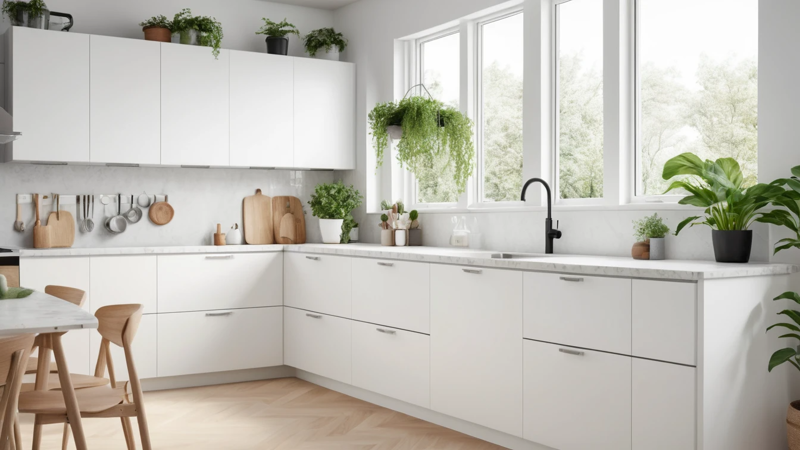
IKEA quartz countertops review deliver style and durability without the hefty price. Discover pros, cons, costs, installation tips, and more.
IKEA quartz countertops offer a blend of engineered stone durability and affordable style, making them a strong choice for anyone looking to upgrade their kitchen surface with low maintenance and modern aesthetics.
IKEA Quartz Countertops Review – Everything You Need to Know
Ever wonder if upgrading to a quartz countertop from IKEA is really worth it? If you’re prepping to remodel your kitchen and are tempted by those sleek, engineered stone surfaces, you’re in the right place.
In a nutshell: yes— IKEA quartz countertops can give you a stylish, durable work surface, but like any major home buy, they come with trade-offs. Let’s dive deep so you can decide if they’re the right move for your kitchen.
Understanding The Search Intent 🔍
When someone searches “IKEA quartz countertops”, they’re usually trying to find:
- What these countertops are (material, specs)
- Pricing and cost breakdown
- How they compare to granite, marble or other quartz brands
- Reviews from real users (durability, maintenance)
- How to buy, install, and maintain them
So this article will cover each of those points in plain English—with tips, pros/cons, and actionable info.
What Are IKEA Quartz Countertops?
Let’s break it down: “quartz” here is engineered quartz stone—meaning crushed quartz blended with resins and pigments to create a durable slab.
At IKEA, you’ll find these as part of their custom-made kitchen worktop offering.
That means you select the size, color, and finish (through IKEA’s kitchen planning service) and they supply the countertop—either as part of a full kitchen or stand-alone.
So when you pick an “IKEA quartz countertop”, you’re essentially getting a branded option for this engineered stone material, fitted into IKEA’s system.
Why Choose Quartz Over Other Materials?
Here’s why quartz is a popular pick—and especially why IKEA markets theirs as such:
- Non-porous surface: Resists stains, won’t absorb spills like natural stone can.
- Low maintenance: You don’t need to seal it yearly like some granites or marbles.
- Wide design options: Engineered allows a big range of colours and patterns—so you get marble-look, solid colour, speckled, etc.
- Durability: It stands up to day-to-day kitchen life: chopping, pouring, handling messes.
Put simply: If you want something that looks great and lets you spend less time worrying about stains and upkeep, quartz is strong.
What Makes The IKEA Option Special?
So what’s unique about the IKEA version of quartz countertops?
- Integrated into IKEA’s kitchen workflow: measurement, ordering, delivery, installation all tie into their planning service.
- Often more budget-friendly than independent quartz slab suppliers. One reviewer noted prices around $69 per square foot for their IKEA quartz.
- Broad range of colour/finish options via IKEA’s system—so you can match to their cabinets, hardware, etc.
Typical Cost & What Affects It
Here’s a table to break down how cost for IKEA quartz countertops can vary (based on publicly reported data):
| Cost Factor | Typical Range / Notes |
| Price per square foot | Around ~$60-$70 (in U.S. markets) for some IKEA quartz options. |
| Thickness & slab size | Thicker or larger slabs cost more. |
| Colour/finish complexity | Premium colours or stone-effect finishes cost extra. |
| Installation & templates | Fit and delivery often add cost (or are bundled). |
| Removal of existing counters | If you need demo & haul-away, expect added expense. |
This gives you a ballpark for budgeting. Obviously pricing will differ by region, installer, local supply chain, etc.
Pros 👍 and Cons 👎 of IKEA Quartz Countertops
Here’s a balanced view so you go in with eyes open.
Pros:
- Sleek, modern aesthetic—lots of design flexibility.
- Very good durability for everyday kitchen life.
- Low maintenance compared to natural stone.
- Value for money—especially if you’re already buying IKEA kitchen cabinets.
- Good colour/finish choice set.
Cons:
- Some buyers report chipping or damage if not installed properly or if subjected to heavy impact.
- Because it’s engineered, seams and edges might differ from high-end custom “stone house” jobs.
- If one slab is damaged, replacement may involve removing part of the run.
- Cost, while reasonable, is still higher than simpler materials like laminate or standard laminate worktops.
Real User Reviews & Experience 🎤
Here’s what actual homeowners say—so you get real voice on performance.
“The only thing Ikea has to do with the stone countertops is that we offer them to you… the company our counter came from is Caesarstone.”
“Within the first year I started seeing chips and little dents around the sink and on top of the counters.”
On the flip side:
“Nothing but 5* comments from people who see them… bullet proof, no staining.”
So the takeaway: Many folks are happy, but it does depend on installation quality, slab handling, and how you use it.
Choosing Colour & Finish – Style Tips 🎨
When picking your IKEA quartz countertop, here are smart questions to ask:
- Do you want solid colour (uniform) or stone-effect (marble look, speckles)?
- What finish do you prefer? Polished (shiny), matte (soft), textured?
- Will you match it to your cabinets/hardware, or contrast for impact?
- How big is your kitchen? Larger island or small galley? Colour choices may differ.
Here are some trending combos: - Bright white quartz + light wood cabinets = airy, Scandinavian feel.
- Dark grey or black quartz + white cabinetry = high-contrast modern.
- Beige or warm stone-effect quartz + medium wood cabinets = cosy, transitional.
Using IKEA’s colour range you can tap into these vibes.
Measurement & Ordering: Step-by-Step
Here’s how the process generally goes when ordering from IKEA:
- Measure your kitchen accurately: lengths, corners, sinks, overhangs.
- Use IKEA’s kitchen planning tool (or in-store consultation) to pick your slab.
- Order the quartz slab: select colour, thickness, finish, edge style.
- Choose installation service (IKEA may refer to a third-party fabricator/installer).
- Await delivery and installation—ensure your base cabinets are level and properly prepared.
Bonus tip: Ask about lead time. Slabs may be special-order and take several weeks.
Installation Tips & What to Watch For ⚠️
To get the most from your IKEA quartz countertop:
- Ensure your cabinetry is level. Uneven base cabinets can cause stress on the slab and lead to cracks or misalignment.
- Ask for proper seaming where two pieces join. The closer the match, the less visible the seam.
- Use trivets or hot pads under hot pots: while quartz is durable, like all materials, extreme heat can cause damage.
- Prevent chipping: avoid dropping heavy objects on edges, and try not to load cabinets above slabs beyond weight ratings.
- Check the finish: matte surfaces can show fingerprints or marks more than polished finishes.
In short, the installation matters a lot. A perfect slab with poor install will disappoint.
Maintenance & Care – Keeping It Looking New ✨
Once installed, you want your countertop to stay beautiful. Here’s your maintenance cheat sheet:
- Daily: Wipe with a soft cloth and warm water + mild detergent. Avoid harsh chemicals and abrasives.
- Stain prevention: Clean spills promptly—especially wine, coffee, oils. Quartz is non-porous, but prompt cleaning keeps it looking sharp.
- Heat caution: Never place a piping hot pot directly on the surface—use a trivet.
- Cutting: Always use a cutting board. While quartz is tough, direct chopping can damage knives or the surface.
- Deep clean: Once in a while, use a non-abrasive cleaner or solution of vinegar and water (if colour-safe).
Follow these and you’ll keep it looking fresh for years.
How IKEA Quartz Compares With Granite & Marble
Here’s a comparison to help you decide:
| Material | Maintenance | Cost Range | Aesthetic | Longevity |
| Quartz | Low – no sealing needed | Moderate to high (IKEA is value) | Many colours/patterns, engineered uniformity | 20+ years or more |
| Granite | Medium – periodic sealing | Variable high | Natural stone veining, unique patterns | Very long if maintained |
| Marble | High – very porous, seals often | High | Premium luxury, classic veining | Longevity depends on care |
Quartz via IKEA gives a “sweet spot” for many homeowners: better durability and lower maintenance than marble, while offering design flexibility.
Is It The Right Choice For Your Kitchen?
Ask yourself these questions to decide:
- Do you want low-maintenance? If yes, quartz wins.
- Do you prefer uniform look over natural variation? Quartz offers more control.
- Are you working with a budget? IKEA’s quartz may offer value, especially bundled with their kitchen system.
- How do you use your kitchen? If heavy cooking, kids, messes—durability and ease matter.
- Are you planning to stay in this kitchen for many years? If yes, investing in a quality surface like quartz from IKEA makes sense.
If the answers lean yes, then IKEA quartz countertops are a solid choice.
Cost Saving Tips & How to Get the Best Deal 💡
Here’s how to maximize value:
- Wait for IKEA kitchen sales or member promotions: some buyers noted getting discounts off list price.
- Choose standard slab sizes when possible (custom shapes cost more).
- Bundle with other IKEA kitchen items (cabinets + countertops) to get better pricing or service.
- Use a standard finish rather than premium edge or exotic colour.
- Carefully compare installation quotes—make sure the measurement/fabrication is included so you avoid surprise costs.
A smart shopper can secure nearly the design and durability of high-end quartz at a more accessible price.
Common Mistakes to Avoid
Prevent buyer’s remorse by steering clear of these pitfalls:
- Skipping the cabinet level/flat check before install—wonky base cabinets = bad surface.
- Choosing an overly light colour in a heavy-traffic kitchen without considering stains or hidden dirt.
- Ignoring the edge profile and how it matches your design—edges matter for finishing look.
- Forgetting seams visibility—if two slabs join poorly, it shows.
- Picking materials without factoring daily use—kids? Heavy cooking? Choose accordingly.
Avoid these, and you’ll be much more satisfied.
Bringing It All Together 🏁
So what’s the bottom line? If you’re after a stylish, durable countertop that doesn’t demand constant care, and you’re working with a sensible budget, the IKEA quartz option is absolutely worth considering. Yes, you’ll want to pay attention to colour, finish, install quality, and maintenance, but the foundation is strong.
Remember: material is only one piece of the puzzle—how you install it, how you use it, and how you care for it make the difference. With smart choices, you’ll get a kitchen surface that looks great, works hard, and stays beautiful for years.
FAQs
Q: What is the best way to clean IKEA quartz countertops?
Use a soft cloth with warm water and mild detergent. Avoid oily, abrasive or scouring products to keep the surface looking new.
Q: Are IKEA quartz countertops more affordable than custom quartz slabs?
Generally yes—many users report lower cost per square foot with IKEA, especially during promotions.
Q: How long do IKEA quartz countertops last?
With proper care and install, you can expect decades of service. Their engineered surface resists stains and wear.
Q: Can I install IKEA quartz countertops myself?
It’s possible but not recommended unless you have experience. Ensuring proper leveling, templating, and sealing is critical for best results.
Q: Do I need to seal IKEA quartz countertops like granite or marble?
No—one of the benefits of engineered quartz is that it is non-porous and doesn’t require regular sealing like natural stone.